How to Start Exporting from Indonesia : A Practical Guide for Businesses
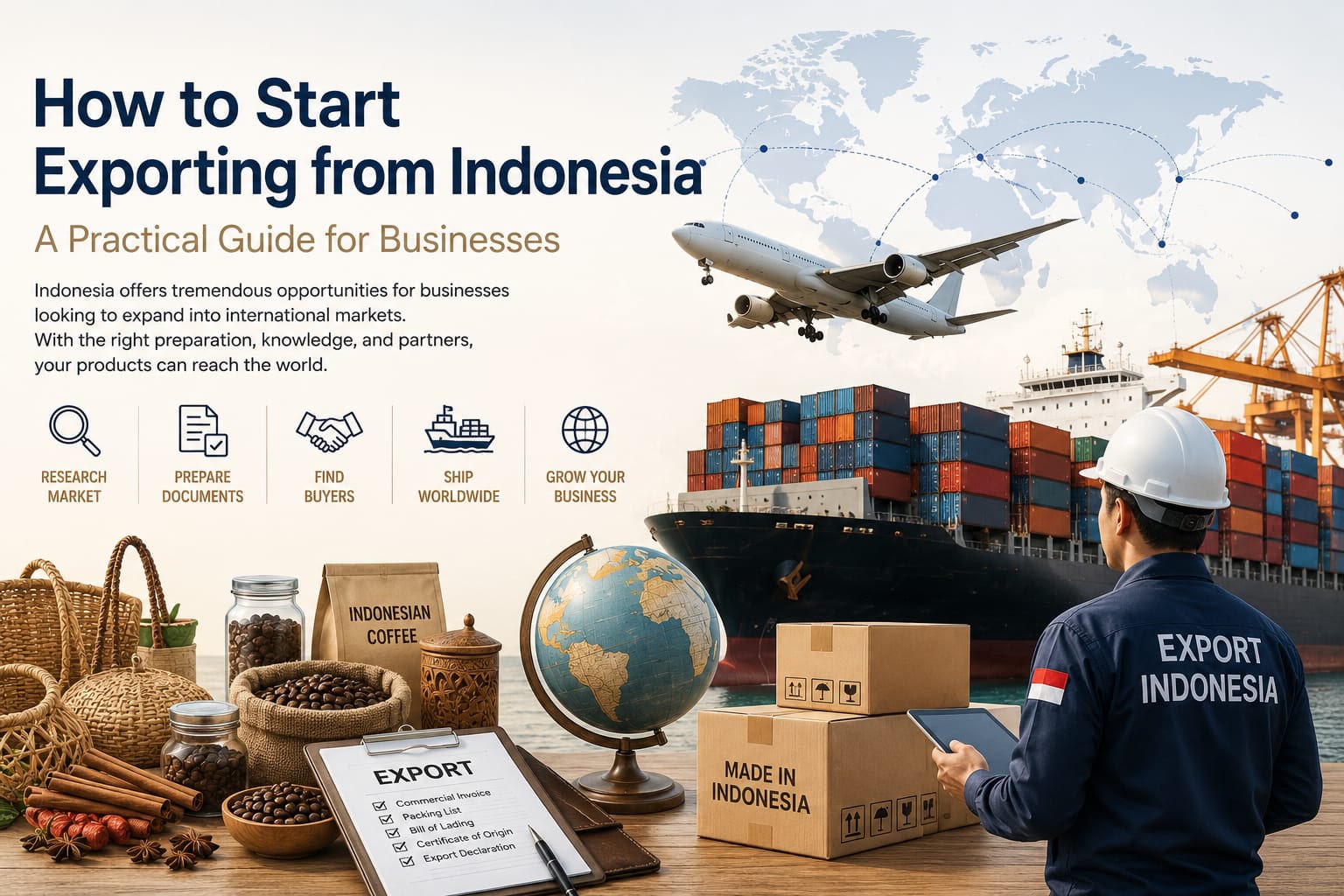
Indonesia offers tremendous opportunities for businesses looking to expand into international markets. This practical guide explains the essential steps to start exporting from Indonesia, from selecting the right product and finding international buyers to preparing export documentation and managing logistics.
Indonesia offers tremendous opportunities for businesses looking to expand into international markets. With abundant natural resources, a growing manufacturing sector, and access to major global trade routes, the country has become one of Southeast Asia’s most attractive export destinations.
However, successful exporting requires more than simply finding a product and shipping it overseas. Businesses must understand regulations, identify the right markets, build reliable partnerships, and develop an efficient supply chain.
This guide outlines the essential steps for starting an export business from Indonesia.
Step 1: Identify the Right Product
Not every product is suitable for international markets.
Before starting, evaluate whether your product has:
* Consistent quality * Sufficient production capacity * Competitive pricing * International demand * Export potential
Some of Indonesia’s most successful export products include:
* Coffee * Spices * Coconut products * Seafood * Furniture * Handicrafts * Textiles * Agricultural products
Market research is essential to determine which products have the greatest growth potential.
Step 2: Research International Markets
Understanding your target market is one of the most important aspects of exporting.
Analyze factors such as:
* Consumer demand * Import regulations * Market size * Competition * Pricing * Distribution channels
Questions to consider include:
* Which countries import similar products? * What certifications are required? * What quality standards must be met? * What products are currently trending?
Selecting the right market can significantly improve your chances of success.
Step 3: Register Your Business and Obtain the Necessary Licenses
Before exporting, businesses should ensure they comply with all Indonesian regulations.
Common requirements include:
* Business registration * Tax registration * Export licensing * Product certification * Customs documentation
Depending on the product category, additional permits or certifications may be required.
Step 4: Prepare Export Documentation
International trade depends heavily on accurate documentation.
Common export documents include:
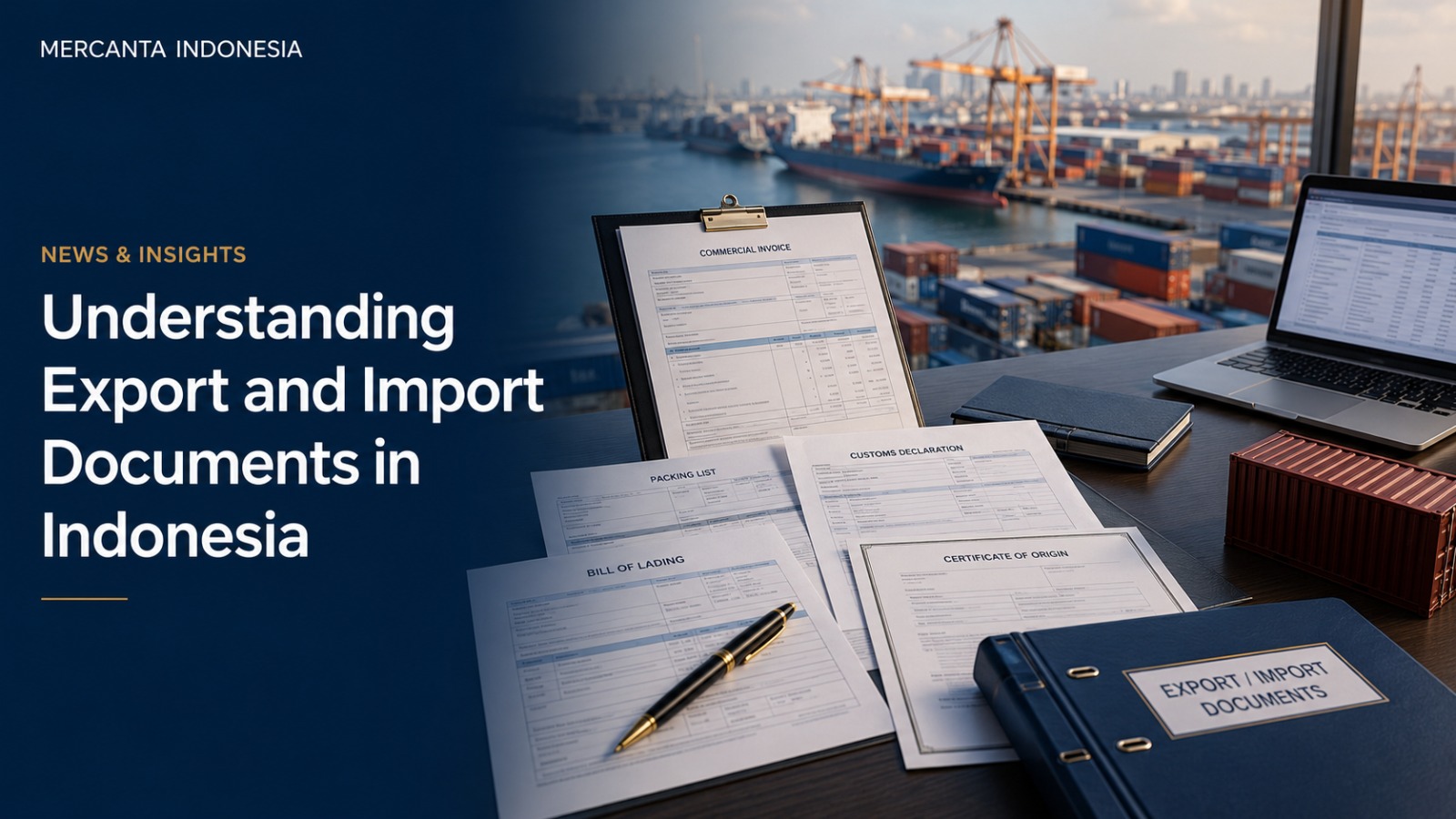
* Commercial invoice * Packing list * Bill of lading * Certificate of origin * Export declaration * Insurance documents
Incomplete or inaccurate documentation can cause shipment delays and additional costs.
Step 5: Find International Buyers
Finding buyers is often the biggest challenge for new exporters.
Several strategies can help businesses connect with international buyers:
* Business-to-business marketplaces * Trade exhibitions * Industry associations * Trade missions * Export directories * Digital marketing
Building long-term relationships is often more valuable than pursuing one-time transactions.
Step 6: Choose the Right Shipping Method
Selecting an appropriate logistics strategy is critical.
Several factors should be considered:
* Shipping costs * Delivery times * Product characteristics * Packaging requirements * Customs procedures
Exporters typically choose between:
* Sea freight * Air freight * Multimodal transportation
Working with experienced logistics providers can reduce operational risks.
Step 7: Understand Incoterms
Incoterms define the responsibilities of buyers and sellers during international transactions.
Commonly used Incoterms include:
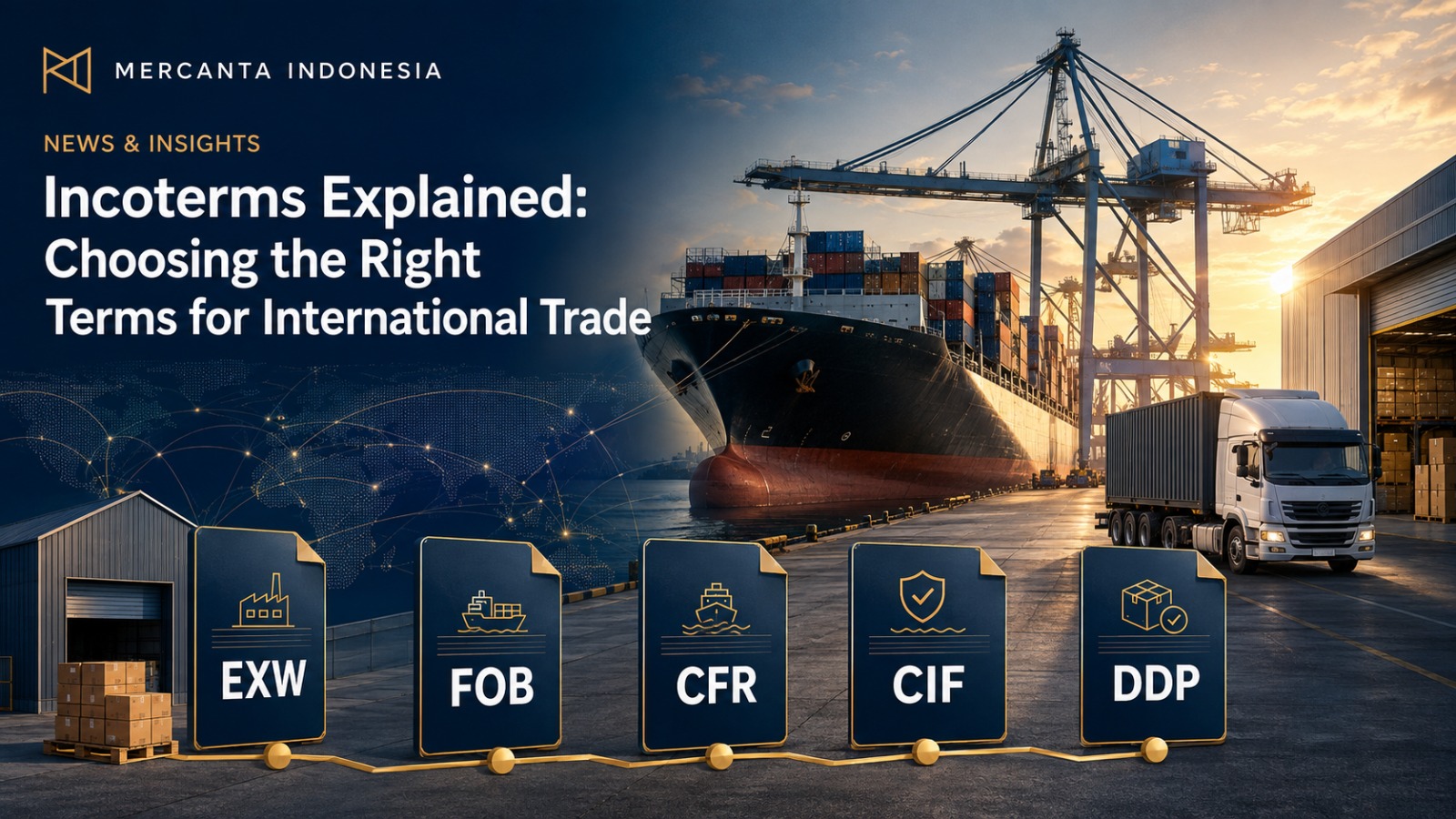
* EXW (Ex Works) * FOB (Free on Board) * CIF (Cost, Insurance, and Freight) * DDP (Delivered Duty Paid)
Understanding these terms helps businesses avoid misunderstandings related to shipping costs, insurance, and risk management.
Step 8: Develop a Strong International Brand
Today’s buyers look beyond price.
Successful exporters invest in:
* Professional branding * Product packaging * Digital presence * Corporate websites * Social media * Product catalogs
A strong brand increases credibility and helps businesses compete in international markets.
Common Challenges for New Exporters
Many businesses encounter similar challenges during the early stages of exporting, including:
* Limited market knowledge * Complex regulations * Difficulty finding buyers * Logistics challenges * Quality control issues * Currency fluctuations
Understanding these challenges in advance allows businesses to develop effective solutions.
Looking Ahead
Indonesia continues to strengthen its position in global trade, creating new opportunities for exporters across multiple industries.
Businesses that combine product quality, market intelligence, strong partnerships, and effective logistics strategies will be better positioned to succeed internationally.
Mercanta Indonesia helps connect Indonesian suppliers with international buyers, creating opportunities for sustainable growth and long-term global partnerships.