Incoterms Explained: Choosing the Right Terms for International Trade
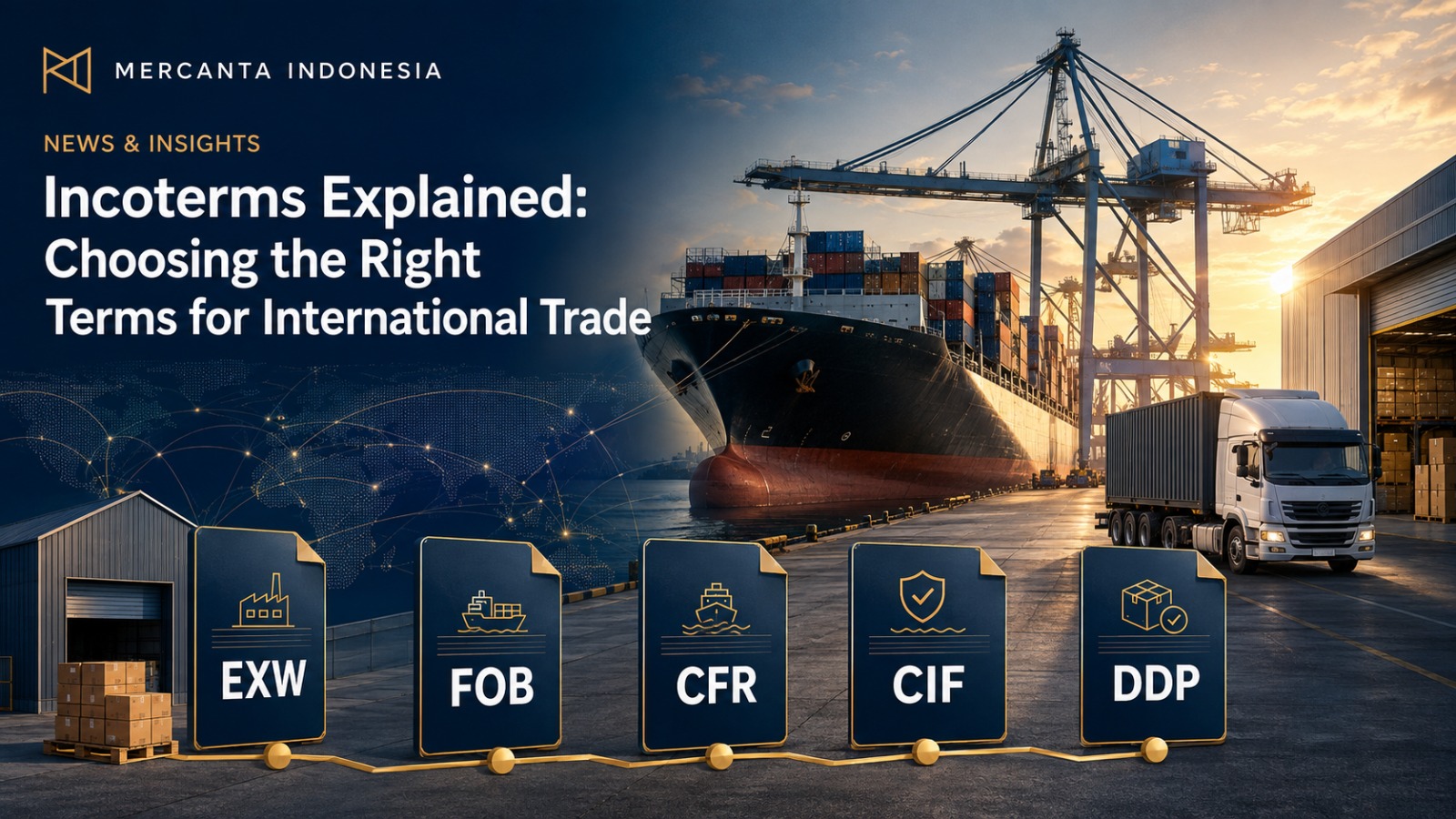
A clear guide to understanding key Incoterms (EXW, FOB, CFR, CIF, DDP) and choosing the right trade terms to manage costs, risks, and responsibilities.
International trade involves several parties, including sellers, buyers, freight forwarders, shipping companies, insurers, customs authorities, and local transport providers. Without clearly defined responsibilities, misunderstandings can easily arise over transportation costs, customs procedures, insurance, and the risk of damaged or lost goods.
Incoterms help prevent these problems by establishing internationally recognized rules for the delivery of goods.
Among the most commonly used terms are EXW, FOB, CFR, CIF, and DDP. Each term creates a different division of costs, responsibilities, and risks between the seller and the buyer.
Understanding these differences is essential before issuing a quotation, signing a sales contract, or arranging an international shipment.
What Are Incoterms?
Incoterms—short for International Commercial Terms—are standardized trade rules published by the International Chamber of Commerce.
They clarify several important questions:
• Who arranges transportation? • Who pays the freight costs? • Who handles export customs clearance? • Who handles import customs clearance? • Who pays import duties and taxes? • Who arranges cargo insurance? • At what point does risk transfer from the seller to the buyer?
Incoterms do not automatically determine:
• Ownership of the goods • Payment methods • Payment deadlines • Product quality requirements • Warranty obligations • Consequences of a contract breach • Dispute-resolution procedures
These matters should be addressed separately in the sales contract.
Each Incoterm should be written with a clearly defined location and the applicable version of the rules. For example:
FOB Tanjung Priok Port, Jakarta, Incoterms® 2020
Using only “FOB Indonesia” is not sufficiently precise because Indonesia has numerous ports and delivery locations.
1. EXW — Ex Works
Under EXW, the seller makes the goods available at an agreed location, usually the seller’s factory, warehouse, or production facility.
The buyer is responsible for most activities after the goods are made available.
Seller’s primary responsibilities
The seller generally:
• Produces and prepares the goods • Packs the goods as agreed • Makes the goods available at the named location • Provides the commercial invoice and agreed supporting documents
Buyer’s primary responsibilities
The buyer generally:
• Arranges collection from the seller’s location • Handles loading, unless otherwise agreed • Arranges inland transportation • Completes export customs procedures • Pays terminal and freight costs • Arranges cargo insurance if required • Handles import customs clearance • Pays import duties and taxes • Arranges delivery to the final destination
When does risk transfer?
Risk generally transfers when the goods are placed at the buyer’s disposal at the named location, before loading onto the collecting vehicle.
Simple example
An Indonesian furniture producer sells goods under:
EXW Supplier’s Factory, Jepara, Indonesia, Incoterms® 2020
The buyer—or the buyer’s appointed logistics provider—collects the goods from the factory and manages the remaining transportation and customs process.
Advantages of EXW
For the seller:
• Minimal logistics responsibility • Simple freight-cost calculation • Limited exposure to transportation risks
For the buyer:
• Full control over freight arrangements • Freedom to select logistics providers • Potentially better freight rates for experienced importers
Important consideration
EXW may appear simple for the seller, but it can create practical complications when the buyer cannot easily handle export customs formalities in the seller’s country.
For international container shipments, FCA—or Free Carrier—may sometimes provide a more practical allocation of export responsibilities than EXW.
2. FOB — Free on Board
FOB is commonly used for goods transported by sea or inland waterway.
Under FOB, the seller is responsible for delivering the goods on board the vessel selected by the buyer at the named port of shipment.
Seller’s primary responsibilities
The seller generally:
• Produces and packs the goods • Arranges transportation to the port • Handles export customs clearance • Pays the costs required to place the goods on board the vessel • Provides the agreed export and shipping documents
Buyer’s primary responsibilities
The buyer generally:
• Selects or nominates the vessel • Arranges and pays the main ocean freight • Arranges insurance if desired • Bears the risk after the goods are on board • Handles destination-port charges • Completes import customs clearance • Pays import duties and taxes • Arranges transportation to the final destination
When does risk transfer?
Risk transfers from the seller to the buyer when the goods are on board the vessel at the named port of shipment.
Simple example
An Indonesian coffee exporter sells a shipment under:
FOB Tanjung Perak Port, Surabaya, Indonesia, Incoterms® 2020
The exporter delivers the coffee on board the buyer’s nominated vessel. The buyer then bears the risk and pays the ocean freight from Surabaya to the destination country.
Advantages of FOB
For the seller:
• The seller controls the export process • Responsibility ends after the goods are loaded on board • The export price can be presented without international freight costs
For the buyer:
• The buyer controls the ocean-freight arrangement • The buyer can negotiate directly with the shipping line or forwarder • Freight costs are more transparent
Important consideration
FOB is intended for sea and inland-waterway transport. For containerized shipments handed to a carrier at a terminal before loading onto the vessel, FCA may sometimes be more technically appropriate.
3. CFR — Cost and Freight
CFR is used for transportation by sea or inland waterway.
Under CFR, the seller arranges and pays the ocean freight to the named destination port. However, the risk transfers to the buyer much earlier—when the goods are placed on board the vessel at the port of shipment.
This difference between cost and risk is one of the most important aspects of CFR.
Seller’s primary responsibilities
The seller generally:
• Produces and packs the goods • Arranges transportation to the port • Completes export customs procedures • Loads the goods on board • Arranges and pays ocean freight to the named destination port • Provides the required shipping documents
Buyer’s primary responsibilities
The buyer generally:
• Bears the risk after the goods are on board at the origin port • Arranges cargo insurance if required • Handles destination-port charges where applicable • Completes import customs clearance • Pays duties and taxes • Arranges delivery from the destination port
When does risk transfer?
Risk transfers when the goods are on board the vessel at the port of shipment—not when the goods arrive at the destination port.
Simple example
An Indonesian coconut-product supplier sells goods under:
CFR Port of Rotterdam, Netherlands, Incoterms® 2020
The seller pays the freight to Rotterdam. However, the buyer bears the transportation risk from the moment the goods are placed on board the vessel in Indonesia.
Advantages of CFR
For the seller:
• The seller can offer a price that includes ocean freight • The seller controls the selection and arrangement of the main carriage • The quotation may be easier for buyers to compare
For the buyer:
• International freight is already arranged • The buyer does not need to organize the main ocean transport • The buyer retains control of insurance
Important consideration
CFR does not require the seller to purchase cargo insurance. The buyer should arrange appropriate coverage if protection against transportation risks is needed.
4. CIF — Cost, Insurance and Freight
CIF is similar to CFR, but the seller must also arrange cargo insurance for the buyer’s risk during transportation.
CIF is used only for goods transported by sea or inland waterway.
Seller’s primary responsibilities
The seller generally:
• Produces and packs the goods • Arranges transportation to the port • Completes export customs procedures • Loads the goods on board • Pays ocean freight to the named destination port • Obtains the insurance coverage required under the rule • Provides shipping and insurance documents
Buyer’s primary responsibilities
The buyer generally:
• Bears the risk after the goods are on board at the origin port • Handles import customs clearance • Pays import duties and taxes • Manages destination charges where applicable • Arranges inland delivery from the destination port
When does risk transfer?
As with CFR, risk transfers when the goods are on board the vessel at the port of shipment.
The seller may pay freight and insurance to the destination port, but this does not mean the seller retains the transportation risk until arrival.
Simple example
An Indonesian spice exporter sells a shipment under:
CIF Hamburg Port, Germany, Incoterms® 2020
The exporter pays the freight and obtains the required insurance coverage to Hamburg. However, risk transfers to the buyer once the goods are on board the vessel at the Indonesian port.
Advantages of CIF
For the seller:
• The seller can offer a more complete shipping package • The quotation includes freight and basic insurance • The seller controls the main transportation arrangements
For the buyer:
• Freight and insurance are arranged by the seller • The buyer receives a more convenient destination-port price • The buyer has supporting insurance documentation for the shipment
Important consideration
The insurance required under CIF may provide only the minimum coverage specified by the applicable Incoterms rules. Buyers who require broader protection should request additional coverage in the sales contract or arrange supplementary insurance.
5. DDP — Delivered Duty Paid
DDP places the highest level of responsibility on the seller among the terms discussed in this article.
Under DDP, the seller delivers the goods to the named destination in the buyer’s country after completing import customs clearance and paying the applicable import duties and taxes.
The goods are generally delivered ready for unloading unless the contract states otherwise.
Seller’s primary responsibilities
The seller generally:
• Produces and packs the goods • Arranges export transportation • Completes export customs clearance • Pays international freight • Bears transportation risk to the named destination • Handles import customs procedures • Pays import duties and applicable taxes • Arranges delivery to the agreed destination • Provides the necessary commercial and customs documents
Buyer’s primary responsibilities
The buyer generally:
• Receives the goods at the named destination • Unloads the goods, unless otherwise agreed • Provides necessary assistance or information for import formalities
When does risk transfer?
Risk transfers when the goods are placed at the buyer’s disposal at the named destination, ready for unloading.
Simple example
An Indonesian handicraft supplier sells products under:
DDP Buyer’s Warehouse, Sydney, Australia, Incoterms® 2020
The seller is responsible for arranging transportation, export procedures, import clearance, duties, taxes, and delivery to the buyer’s warehouse.
Advantages of DDP
For the seller:
• The seller can offer a complete door-to-door solution • The service may be attractive to buyers seeking a simple purchasing process • The seller may have greater control over the supply chain
For the buyer:
• Minimal logistics and customs responsibility • Better visibility of the total delivered cost • Goods arrive at the agreed destination after import formalities
Important consideration
DDP can be difficult for sellers that do not have the legal ability, tax registration, customs representation, or local partners required to act as an importer in the destination country.
Before offering DDP, the seller must confirm whether it can legally and practically complete import clearance and pay local duties and taxes.
If the seller cannot manage the import process, another term—such as DAP—may be more appropriate.
Quick Comparison
• EXW: Main Freight Paid By Buyer | Export Clearance: Buyer | Import Clearance: Buyer | Insurance: No mandatory insurance | Risk Transfers: At the seller's named location, before loading • FOB: Main Freight Paid By Buyer | Export Clearance: Seller | Import Clearance: Buyer | Insurance: No mandatory insurance | Risk Transfers: When goods are on board at the origin port • CFR: Main Freight Paid By Seller | Export Clearance: Seller | Import Clearance: Buyer | Insurance: No mandatory insurance | Risk Transfers: When goods are on board at the origin port • CIF: Main Freight Paid By Seller | Export Clearance: Seller | Import Clearance: Buyer | Insurance: Seller arranges required coverage | Risk Transfers: When goods are on board at the origin port • DDP: Main Freight Paid By Seller | Export Clearance: Seller | Import Clearance: Seller | Insurance: No mandatory insurance under the rule | Risk Transfers: At the named destination, ready for unloading
The Difference Between Cost and Risk
A common mistake is assuming that the party paying the freight also bears the risk throughout the journey.
Under CFR and CIF, the seller pays the main freight to the destination port. Nevertheless, risk transfers to the buyer when the goods are placed on board the vessel at the origin port.
This means cost and risk may transfer at different locations.
Both parties should understand:
• Who pays each logistics cost • Who bears the risk at every stage • Whether insurance has been arranged • What the insurance policy actually covers • Which documents are required to make a claim
How to Choose the Right Incoterm
There is no single Incoterm that is ideal for every transaction. The best choice depends on the product, shipment method, buyer experience, seller capabilities, destination-country regulations, and commercial strategy.
Before choosing a term, consider the following questions.
1. Who has better freight rates?
A buyer that regularly imports large volumes may have better shipping contracts. In that case, FOB or FCA may be suitable.
If the seller has stronger logistics arrangements, CFR or CIF may provide greater convenience.
2. Who can manage customs procedures?
The seller should usually manage export clearance if it has the local knowledge and documentation.
Import clearance should be handled by a party legally able to act in the destination country. This is especially important before offering DDP.
3. Who wants control over transportation?
Some buyers prefer to control the carrier, schedule, routing, and insurance. Other buyers prefer a more complete delivered service.
4. What type of transportation is used?
FOB, CFR, and CIF are designed for sea and inland-waterway transport.
For air freight, road transport, courier shipments, multimodal transportation, or many containerized shipments, terms such as FCA, CPT, or CIP may be more suitable.
5. How much risk can each party manage?
The contract should clearly establish when risk transfers and who is responsible for insurance. The value, fragility, perishability, and transportation conditions of the goods should influence this decision.
6. Are all charges clearly identified?
Freight quotations may exclude terminal handling, documentation, customs examination, storage, demurrage, detention, delivery, or other local charges.
Both parties should request a detailed cost breakdown before agreeing on the Incoterm and price.
Common Incoterm Mistakes
Businesses should avoid the following mistakes:
• Using an Incoterm without naming a specific location or port • Failing to state the applicable Incoterms version • Assuming Incoterms determine ownership or payment terms • Confusing the party paying freight with the party bearing risk • Using FOB, CFR, or CIF for unsuitable transport arrangements • Offering DDP without understanding destination-country regulations • Assuming CIF insurance covers every possible risk • Failing to define terminal and local charges • Using an Incoterm that conflicts with the sales contract • Copying a trade term from a previous transaction without reviewing the new shipment
Final Thoughts
Incoterms are not merely shipping abbreviations. They are essential tools for allocating costs, responsibilities, and risks in international trade.
In simple terms:
• EXW gives most responsibilities to the buyer. • FOB requires the seller to place the goods on board the vessel. • CFR requires the seller to pay the ocean freight, while risk transfers at the origin port. • CIF adds seller-arranged insurance to the CFR structure. • DDP requires the seller to manage nearly the entire delivery process, including import clearance and duties.
The right choice should reflect the operational capabilities of both parties. It should also be stated clearly in the quotation, purchase order, commercial invoice, and sales contract.
How Mercanta Indonesia Can Help
Mercanta Indonesia supports international buyers and Indonesian suppliers in building clearer and more reliable trade transactions.
Our services can help coordinate:
• Product sourcing • Supplier communication • Commercial terms • Export documentation • Freight arrangements • Procurement requirements • Buyer and supplier coordination
By establishing clear responsibilities from the beginning, buyers and suppliers can reduce unexpected costs, minimize misunderstandings, and create stronger long-term trade relationships.
For sourcing inquiries or international trade partnerships, contact Mercanta Indonesia to explore opportunities in the Indonesian market.
Disclaimer: This article provides general information and does not constitute legal, tax, customs, insurance, or contractual advice. Businesses should review the complete Incoterms® 2020 rules and consult qualified trade professionals before selecting terms for a specific transaction.